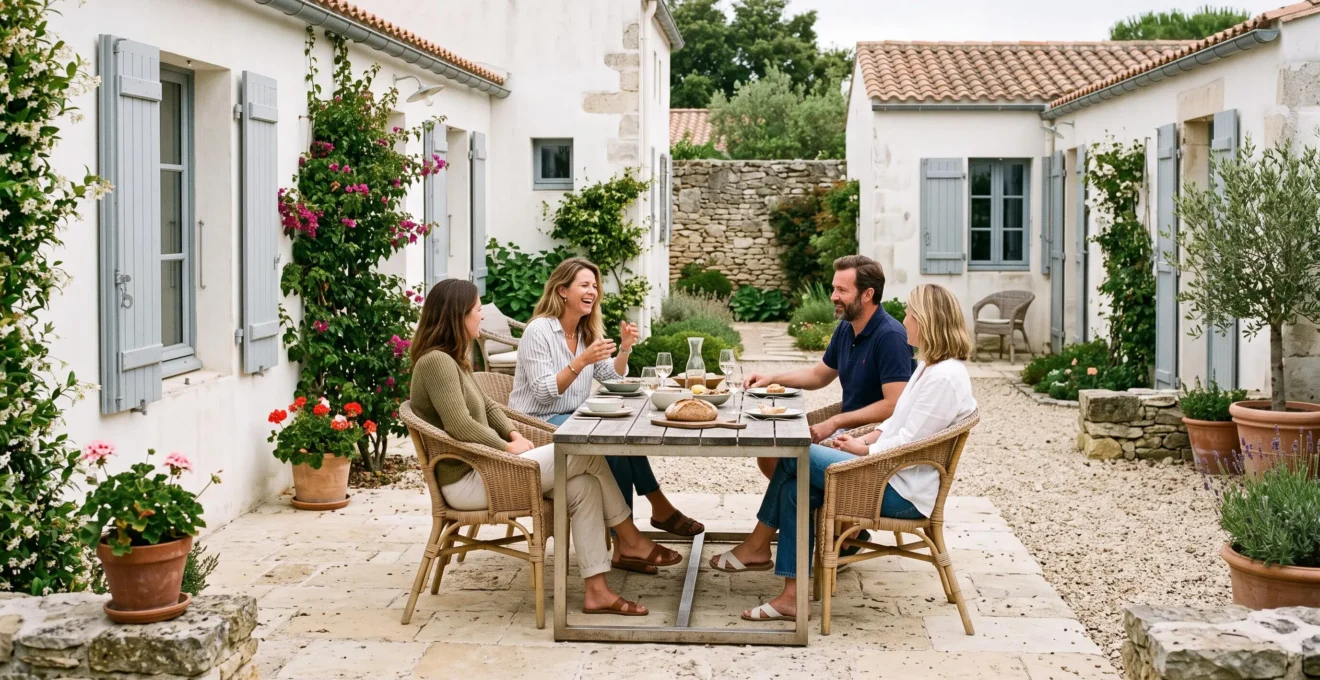
Planning a group villa holiday on Île de Ré starts with four decisions: who is travelling, where everyone will sleep, how much the group can spend and which part of the island best suits the trip. Once those details are agreed, you can compare properties, arrange transport and organise activities without leaving important decisions until arrival.
The key is to choose a villa around your group’s actual needs rather than its advertised capacity or appearance. From bedroom arrangements to cycling routes and shared expenses, a few practical checks can make the difference between a convenient holiday and one filled with avoidable compromises.
Agree on the Group’s Needs Before Searching
Before browsing villa listings, establish who is definitely coming. Eight guests do not necessarily need eight bedrooms, but four bedrooms may be unsuitable if several friends expect private sleeping spaces. Record the number of adults and children, which guests are comfortable sharing and whether anyone needs step-free access.
Settle on dates and a maximum accommodation budget at the same time. If participants arrive separately, identify who will collect keys and how late arrivals will reach the property.
- Confirm the total guest count and preferred travel dates.
- Record bedroom arrangements and individual sleeping preferences.
- Identify accessibility needs and requirements for children or pets.
- Agree on the total budget and appoint someone to coordinate decisions.
Keep these requirements in one shared list, separating essentials from preferences. A suitable bedroom layout should take priority over an attractive swimming pool that only some guests intend to use.
Decide Whether One Shared Villa Fits Your Group
Île de Ré offers different accommodation styles, including village houses, apartments and villas. For a group that enjoys cooking and spending evenings together, an entire villa can provide communal areas and a shared outdoor setting.
However, one property is not necessarily the best choice for everyone. Several smaller rentals may offer more independence, while hotel rooms can suit travellers who prefer separate accommodation and serviced facilities. Compare the actual sleeping arrangements, privacy, location and included services before deciding.
When deciding between one villa and several hotel rooms, compare the way people will actually use the accommodation. The practical vacation rental benefits include the possibility of shared living and dining areas, although value for money still depends on the individual properties and their full costs.
Choose the Right Part of Île de Ré
Your preferred village should reflect how the group wants to spend its days. Some travellers prioritise village restaurants and shops within walking distance; others prefer access to beaches, cycling routes or a quieter residential setting.
The following locations offer different starting points for a search. They are examples rather than a ranking: the position of an individual villa matters more than the village name alone.
| Village | Reason to consider it | What to verify |
|---|---|---|
| Saint-Martin-de-Ré | A harbour-town setting with opportunities for village outings | Walking distance to the centre, beach access and parking |
| La Flotte | A village-based stay with shops and local outings | Nearby facilities, walking routes and transport connections |
| Le Bois-Plage-en-Ré | A location to consider when beach visits are a priority | Actual distance to the preferred beach and shops |
| La Couarde-sur-Mer | A possible base for exploring different parts of the island | Cycling routes and connections to planned destinations |
Check each shortlisted address on a map. Compare the routes to a grocery shop, beach and likely meeting points, taking into account children, luggage and anyone who cannot comfortably cycle. A convenient location for one guest may be impractical for another.
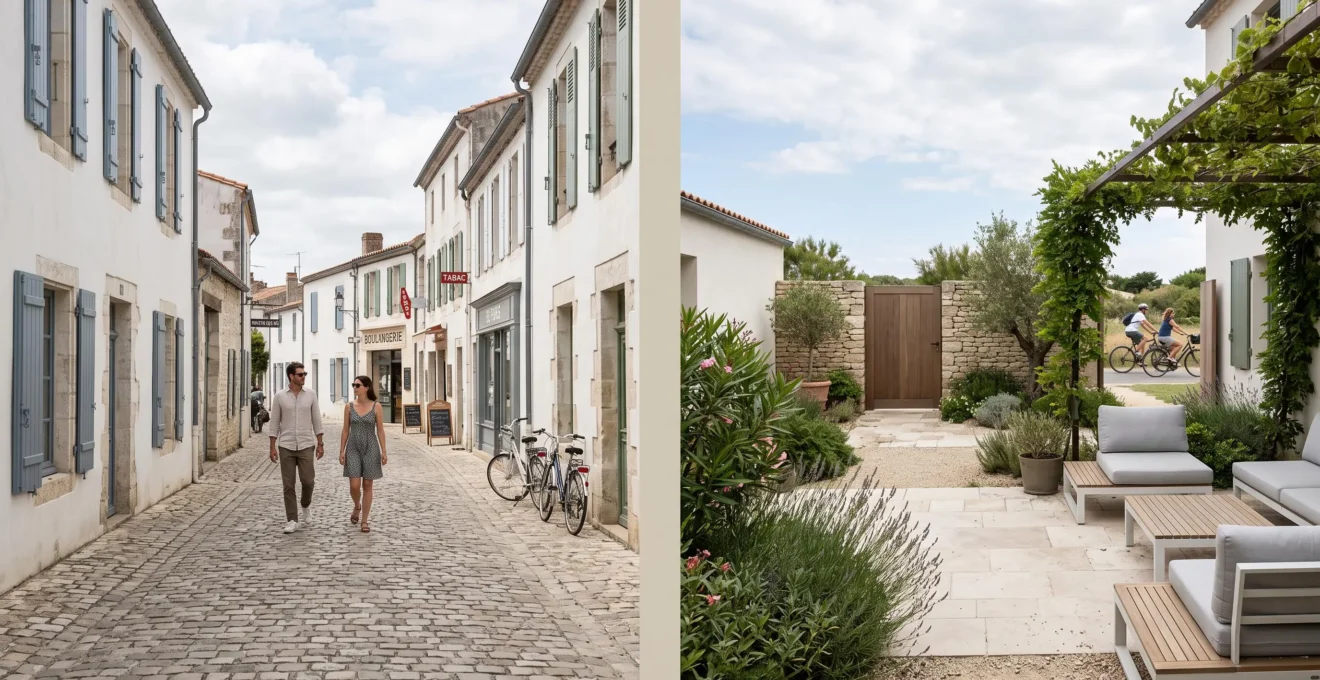
Check the Villa’s Layout and Facilities
A listing that sleeps ten people does not necessarily provide ten conventional beds or enough privacy for five couples. Request a room-by-room description, including double beds, single beds, bunk beds and sofa beds. Check whether bathrooms are shared and whether the dining table comfortably accommodates everyone.
The kitchen also deserves attention. A villa may have an attractive dining area without sufficient cookware, refrigeration or tableware for a large group. Likewise, confirm whether outdoor furniture, laundry facilities, Wi-Fi and parking are included in the advertised accommodation.
- Confirm the maximum permitted number of guests.
- Match each bedroom and bed to the expected occupants.
- Check the bathrooms and available dining seats.
- Verify cooking equipment, refrigeration and essential appliances.
- Confirm parking, stairs and accessibility arrangements.
- Examine outdoor facilities and child-safety precautions where relevant.
- Check whether linen, towels, Wi-Fi and arrival arrangements are included.
For families with young children, ask specifically about access to stairs, balconies, windows and swimming pools. Anyone with reduced mobility should confirm the actual entrance, bathroom and bedroom layout rather than rely on a general description of accessibility.
Get important answers in writing. Photographs help assess a space, but they cannot establish every operational detail of a rental.
Compare Total Costs and Booking Conditions
To compare two villas fairly, use the same dates, number of guests and included services. Start with the complete accommodation charge, then account for disclosed cleaning costs, applicable tourist taxes and other non-refundable fees. Keep travel, groceries and optional activities in separate budget categories.
Hypothetical Group Budget: A seven-night villa costing €2,800 plus €200 in non-refundable charges totals €3,000. If six people contribute equally, each pays €500. The calculation is (€2,800 + €200) ÷ 6 = €500. These amounts illustrate the method; they are not observed Île de Ré rental prices.
A refundable security deposit needs different treatment. Although the group may need to provide the money temporarily, it should not automatically be counted as a final accommodation expense. Check the circumstances in which deductions could apply and agree who will provide the deposit.
Before paying, review the rental agreement, cancellation conditions, payment schedule and guest limits. Confirm check-in and departure arrangements, any minimum-stay requirement and which advertised facilities will be available during the booking. A cheaper headline rate can become less attractive once all conditions are compared.
Plan the Journey and Travel Around the Island
Rail travellers can reach La Rochelle using national or regional train services. SNCF Connect describes the available services and onward transport around La Rochelle station connections. The group must still arrange the final journey to its villa on Île de Ré and check the relevant departures for its travel dates.
Travellers arriving by car can reach the island from the mainland via the bridge. Before agreeing that everyone should drive, check the property’s parking capacity and whether guests could share vehicles. Those travelling by rail should compare public transport with a prearranged transfer, particularly if they carry substantial luggage.
Once on the island, cycling may suit some journeys, but buses, walking and local shuttles can be useful alternatives. The official Île de Ré transport options describe 138 km of cycle paths as well as bus and shuttle services. Check the actual routes, stops and operating dates against the villa’s location before relying on any particular mode.
Bus route 150 is identified in official local guidance as a connection between La Rochelle and island villages, but its timetable and precise stops must be checked for the travel dates. A group travelling with small children or members with limited mobility may need a combination of transport options rather than a cycling-only itinerary.

Organise Meals, Activities and Shared Responsibilities
A successful group holiday needs enough organisation to avoid confusion without turning every day into a fixed schedule. Agree on a few shared experiences, such as a beach outing, a village market visit or a manageable cycling excursion, while leaving room for individuals to explore independently.
Meal planning works in much the same way. Decide whether the group wants communal dinners, rotating cooking responsibilities or a mixture of restaurants and self-catering. Keep shared food costs distinct from personal spending.
- Assign responsibility for booking details, travel arrangements and groceries.
- Agree on which expenses are shared and how contributions will be recorded.
- Choose a few group activities while protecting individual free time.
- Circulate arrival instructions, the villa address and essential property information.
Finally, nominate one person to communicate with the accommodation provider, while making important booking information accessible to all participants. This keeps practical decisions clear without leaving the entire holiday dependent on one organiser.
The best final choice is the property that meets your group’s sleeping needs, practical location, complete budget and agreed booking conditions—not simply the most attractive listing. Before confirming, make sure everyone understands the arrangements and that essential facilities have been checked. If children are joining the holiday, the additional safety and equipment considerations in this family-friendly accommodation checklist can help you complete the property review.